Influenza - the Disease

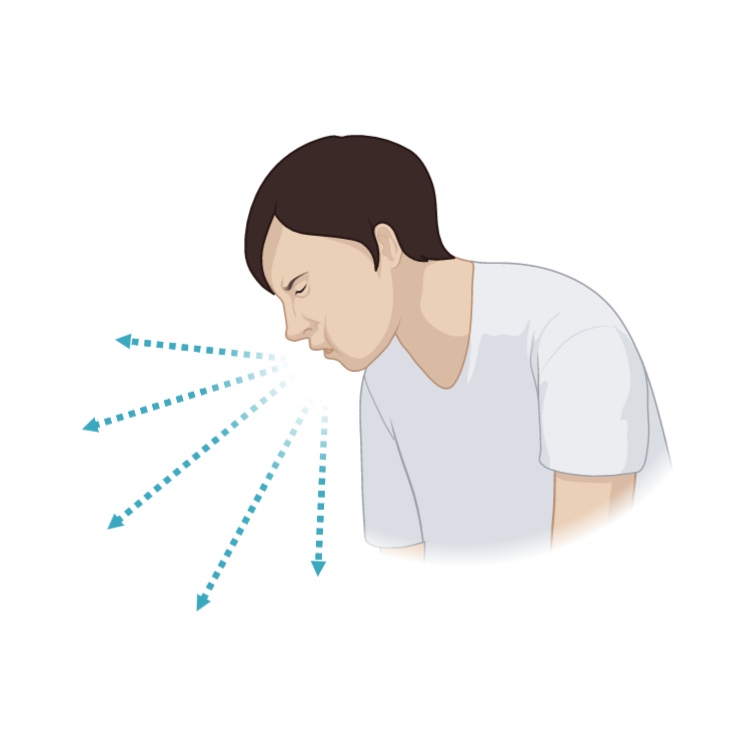
Coughing_Biorender

What is influenza?

Influenza, often referred to as 'the flu', is a respiratory infection caused by a member of the influenza virus family. Influenza virus infections are usually more severe than other respiratory virus infections, and typically involve a combination of respiratory (cough, sore throat) and constitutional (fever, headache, muscle aches) symptoms. In older adults and people with certain pre-existing medical conditions, influenza infections can lead to serious and even life threatening complications. A notable feature of influenza is that repeated infections can occur throughout life.

How is influenza spread?

Influenza is transmitted by tiny droplets of moisture from the respiratory tract of infected people spread by coughing, sneezing, touch or even talking. When these are breathed in by a susceptible person, the viruses they contain can enter the cells of the respiratory tract and multiply. The person will usually become ill within 2–3 days but may be contagious and start shedding virus for up to a day before symptoms are noticed.

When is the influenza season?

In temperate regions of the northern and southern hemispheres, the main influenza season falls around the winter months (November – April for northern hemisphere, May – October for southern hemisphere) with sporadic infections at other times. In regions closer to the equator, influenza may occur throughout the year and some tropical countries may experience two peaks of activity annually.

Who is at greatest risk from influenza?

Older adults (in most countries defined as 65 years and above), people with chronic cardiac, respiratory, kidney, metabolic (eg. diabetes) and immune system diseases, pregnant women, and people in long-term care have a higher risk of severe influenza. Infants under the age of 6 months may also be at increased risk but cannot be protected by current vaccines.

More information:

  • Australian Government Department of Health and Ageing
  • US Centers for Disease Control and Prevention (CDC)
  • US National Institute of Allergy and Infectious Diseases
  • WHO Fact Sheet
  • Top of Page

    Influenza Biology

    Haemagglutinin structure

    What are influenza viruses?

    Two types of influenza virus, designated type A and type B, are of particular public health concern. They can be readily distinguished from each other by laboratory tests but not by clinical symptoms.Type C influenza viruses are of limited public health significance.

    Influenza viruses are coated with two proteins, called haemagglutinin (HA) and neuraminidase (NA). There are many subtypes of influenza A with different variants of haemagglutinin and neuraminidase, although most of these subtypes only circulate in birds. The subtypes of influenza A currently circulating in the human population are A(H1N1)pdm09 and A(H3N2).

    Influenza B viruses only infect humans and are not classified into subtypes. B/Victoria is the only type B Viruses currently circulating in humans.

    Occasionally a new subtype of influenza A virus emerges that has a haemagglutinin to which most humans have not previously been exposed – this is known as 'antigenic shift'. In addition to 'antigenic shift', the haemagglutinin and neuraminidase of type A and B viruses continually change by mutation to produce new strains of the virus, a process referred to as "antigenic drift".

    Influenza mutations

    Can I build long-term immunity to influenza?

    Infection with influenza virus, or immunisation, induces the body to produce antibodies to the strain(s) of virus encountered. Antibodies against the haemagglutinin are most important for protecting us against influenza virus infection. As the circulating viruses change by mutation, these antibodies become less effective at neutralizing the virus, and within a relatively short time they are no longer protective. Therefore, infections can occur repeatedly throughout life, and protection by vaccination requires annual dosing with updated vaccines. When a new subtype of influenza A emerges, most of the population is highly susceptible and infection rapidly spreads worldwide, producing a pandemic.

    Top of Page

    Treatment of Influenza

    HI Assay pipetting

    Can influenza be treated?

    There are two forms of treatment for influenza- symptomatic and antiviral. Drugs that lessen the symptoms of the disease, such as a runny nose, high temperature, coughs and headache, are available over the counter in pharmacies and sometimes supermarkets. These have no effect on the course of the infection.

    Other drugs that limit the replication of the virus are generally only available by prescription from a doctor in Australia but are available in some countries such as New Zealand over the counter in a pharmacy during the prescribed influenza season. This second group comprises the drugs known as 'neuraminidase inhibitors', zanamivir (Relenza) and oseltamivir (Tamiflu) which act on both influenza A and B. Older influenza antivirals such as Amantadine and Rimantadine which were only effective against influenza A viruses, are no longer recommended as currently circulating all influenza A strains have developed resistance to this class of drugs. Not all anti-viral drugs are available in all countries. The newest influenza antiviral drug is baloxavir marboxil (Xofluza) which available in many countries such as the USA, Japan and China is registered in Australia but not distributed for general use but is used in major hospitals.

    Top of Page

    Vaccination against influenza

    HI Assay robot

    How can I protect myself from flu?

    Yearly vaccination is the best way to protect yourself from seasonal influenza infection. In temperate climates this should be undertaken in autumn so that antibodies are at peak levels during the influenza season.

    What is in the influenza vaccine?

    Most influenza vaccines are prepared from influenza virus that has been inactivated and has had some components removed, which means that the vaccines cannot cause infection. When injected, the body's immune system recognizes the fragments of virus as foreign and responds by producing antibodies which will prevent or modify an infection with strains similar to those in the vaccine. In 2026 the live attenuated influenza vaccine (LAIV) known as “Flumist” was made available for the first time in Australia. This vaccine is different from the other influenza vaccines that are available in that it is a “live” virus that has been designed to only replicate in the upper respiratory tract.

    Trivalent influenza vaccines are now currently in many countries, containing the most recent strains of the three types, subtypes or lineages of influenza virus currently circulating globally in humans, A(H3N2), A(H1N1)pdm09 and the B/Victoria Lineage. Following the absence of the B Yamagata lineage in circulation since 2021 the WHO recommend vaccines no longer include the B Yamagata lineage viruses strain as of the 2026 recommendation

    Can I get the flu from the flu shot?

    Definitely not from the inactivated vaccines as the influenza particles in the vaccine are killed and are not infectious. If a child has received the LAIV vaccine (Flumist) then there will be a very mild localised infection in the child’s upper respiratory tract which is generally asymptomatic

    Why do I still get colds after I have had the flu shot?

    The flu vaccine does not protect you from common colds or a number of other respiratory diseases such as COVID-19 or RSV or adenovirus (and others) that may circulate during the winter.

    Why do I need to get a flu shot every year?

    This is recommended for two reasons. Firstly, the strains of influenza virus circulating in the community often change from year to year and, secondly, the protection generated after influenza vaccination is relatively short lived, unlike some other vaccinations such as tetanus.

    What about the new intranasal vaccine?

    An intranasal vaccine that uses live attenuated viruses is available in some countries including Australia now along the USA, Canada, UK where it has been available for many years but not in others (New Zealand). This vaccine is used in a more limited age group compared to the traditional vaccine and is especially suited to children aged 2 years and older. The vaccine is administered via a mist into the nostrils instead of via an injection into the arm. This results in a short term low-level infection which may result in a runny nose for a few days.

    More information:

  • Immunise Australia Program
  • Australian Technical Advisory Group on Immunisation (ATAGI)
  • The Australian Immunisation Handbook
  • National Centre for Immunisation Research and Surveillance
  • US Centers for Disease Control and Prevention (CDC) Q&A on vaccine effectiveness
  • Top of Page

    Pandemic Influenza

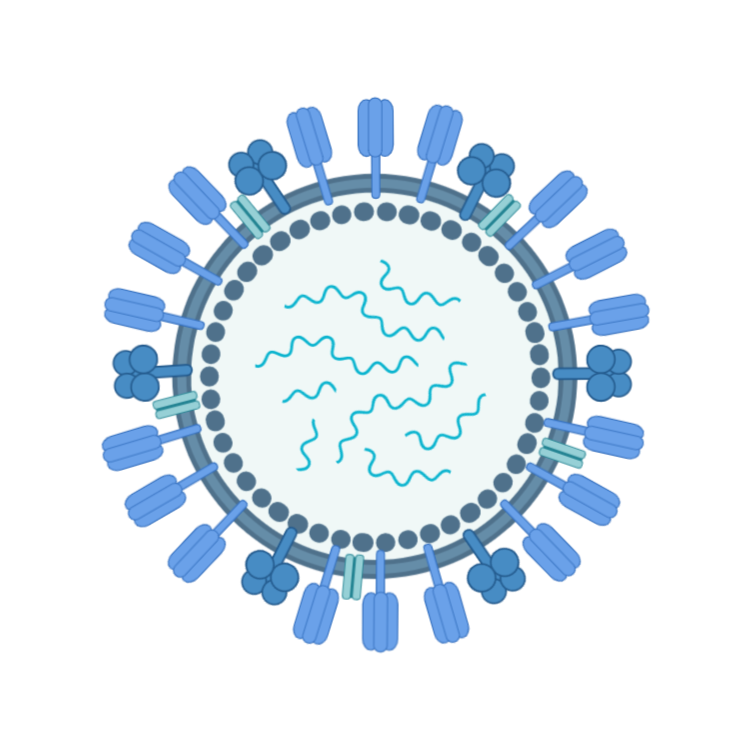
    Influenza Virion Biorender

    What is pandemic influenza?

    An influenza pandemic occurs when a new strain of influenza emerges to which most of the human population has not been previously exposed. This means that immunity within the community is low, allowing rapid infection and transmission of the new strain amongst people on a global scale. Over the course of the past 500 years it is thought that about 13 influenza pandemics have occurred.

    In 2009 the world experienced its first pandemic in 41 years with the emergence of the pandemic A(H1N1) 2009 virus (A(H1N1)pdm09). This virus had many characteristics of viruses circulating in swine and is also related to the 1918 pandemic virus. The A(H1N1)pdm09 virus now continues to circulate in human populations as one of the seasonal influenza viruses.

    More information:

  • Australian Health Management Plan for Pandemic Influenza (AHMPPI)
  • Top of Page

    Avian H5N1, avian H7N9 and other influenza viruses

    Chick Biorender

    H5N1 Update(07 July 2026)

    The current strain of bird flu known as HPAI (Highly Pathogenic Avian Influenza) H5N1 (HA clade 2.3.4.4b) is continuing to spread throughout the world. It has infected wild birds, poultry and even some mammals, including humans. The strain HPAI H5N1 Is highly pathogenic and is known to cause outbreaks and is associated with disease and mass death in poultry and wilds birds. To date infections in humans has been mostly mild.

    Reports indicate that H5N1 (clade 2.3.4.4b) viruses have infected various species, including Pelicans in Peru, sea lions in South America, Dairy cows in the United States and it has even infected penguin species and seals in the remote continent of Antarctica and surrounding islands. Australia reported its first H5N1 (HA clade 2.3.4.4b) in June 2026 in a brown skua found in Cape Le Grand National Park in Western Australia. Since then further cases have been confirmed or presumed in wild birds across various states in Australia, however, there has been no evidence of any mass mortality events or infection in poultry or the wider agriculture industry and the risk to human health remains low.

    Australia reported a human case of Avian influenza in a returned traveller from India in 2024. Genomic sequencing was conducted by the WHO Collaborating Centre for Reference and Research on Influenza (Melbourne, Victoria, Australia) identified the virus as A(H5N1) with a multibasic cleavage site, confirming highly pathogenic avian influenza. The HA clade was identified as 2.3.2.1a, a clade that has previously been detected in Southeast Asia, this strain is different from the HA 2.3.4.4b clade currently circulating in wild birds globally and dairy cows in the USA.

    What is being done to prepare for a H5N1 influenza outbreaks in humans?

    WHO continues to monitor human cases of H5N1 infection throughout the world, as well as avian outbreaks. WHO Collaborating Centres and other laboratories in the WHO Global Influenza Surveillance and Response System (GISRS) collect and characterise H5N1 viruses isolated from infected humans and birds, and the WHO reports regularly on the availability of suitable H5N1 vaccine candidates that correspond to the different groups (clades and subclades) of H5N1 viruses circulating in different parts of the world. A number of research institutions and vaccine manufacturers are developing vaccines for H5N1 influenza and taking them into clinical trials. Many individual governments also have public health emergency plans should human to human transmission occur. In Australia, local bird populations continue to be monitored – to date, highly pathogenic H5N1 viruses have not been found in Australian avian populations. 

    Are there other types of non-human influenzas?

    In addition to avian influenzas, influenza viruses can also infect other animals. While birds can be infected by most of the known influenza A subtypes, a smaller number of subtypes are also known to infect pigs, horses, dogs and other species. Recently bats have been found to have influenza-like viruses. Historically there have been no recorded instances of natural transmission from horses or dogs to humans, but transmission from pigs to humans does occur from time to time. The pandemic H1N1 influenza strain that emerged in 2009, commonly referred to as the 'swine flu', was the result of a series of genetic shuffling events between swine, avian and human influenza viruses that had occurred over many years, ultimately producing a virus that is now transmitted readily between people.

    Additional Resources and References:

  • Avian Influenza| WHO
  • Avian Influenza | Australian Government
  • Avian Influenza | CDC
  • Avian Influenza In Dairy cattle and Cats in US 2024 | CDC
  • Chickens, ducks, seals and cows: a dangerous bird flu strain is knocking on Australia’s door | The Conversation
  • Bird Flu in Antartica | ABC News
  • Bird flu (Avian influenza) | Australian Government
  • Top of Page

    Additional Resources